Microneedling with Exosomes: What a Randomized Split-Face Study Found
Medically reviewed by Robin Baradarian, MD, board certified physician, and Alfred Shirzadnia, DDS, cosmetic and implant dentist.
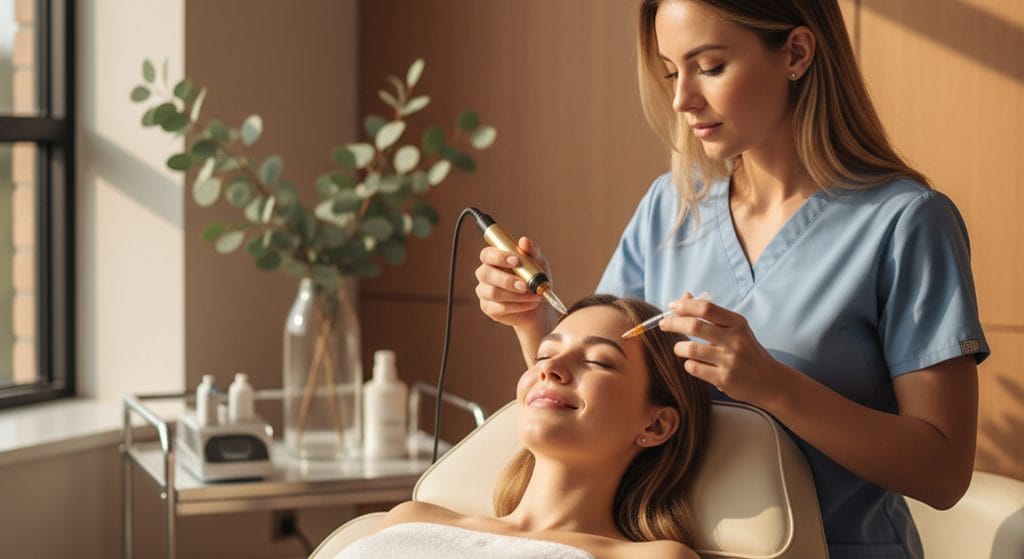
Microneedling has long been a go-to treatment for smoother, firmer skin. Pairing it with exosomes is one of the most talked-about upgrades in aesthetic medicine, but how much do exosomes actually add? A 2023 randomized, split-face study published in the Journal of Cosmetic Dermatology tested exactly that, comparing microneedling with exosomes against microneedling alone on the same faces.[1] Here is what the dermatologists found.
Why Skin Ages
Skin aging is driven by two processes. Intrinsic aging happens with time and genetics. Extrinsic aging comes from outside factors, especially ultraviolet (UV) exposure. Together they cause wrinkles, loss of elasticity, dryness, thinning and uneven pigmentation.[2]
Much of this damage is linked to oxidative stress. Free radicals trigger enzymes that break down collagen while slowing the production of new collagen, gradually weakening the skin’s structure.[1,7]
From Stem Cells to Exosomes
Stem cell therapies, particularly those using adipose-derived (fat tissue) stem cells, have shown promise for skin rejuvenation.[3] Much of their benefit appears to come not from the cells themselves but from the signals they release. However, using whole stem cells has drawbacks, including a rare possible risk of tumor formation, low survival of the cells once applied and difficult quality control.[1,4]
Exosomes offer a way around this. They are tiny vesicles, about 30 to 200 nanometers across, that stem cells release to deliver proteins and genetic messages to other cells. Research suggests exosomes carry much of the regenerative activity of their parent stem cells, making them a promising “cell-free” alternative.[1,5]
How the Study Worked
The study was conducted by dermatologists at several university hospitals and clinics in South Korea, approved by an institutional review board and funded by the National Research Foundation of Korea.[1]
- Split-face design: each participant served as their own control. One side of the face, chosen at random, received an exosome solution plus microneedling. The other side received saline (salt water) plus the same microneedling.
- Participants: 28 adults aged 43 to 66 (average age 54, 71% women) with signs of facial aging. All 28 completed the study.
- The exosome solution: a solution containing about 5 billion exosome particles derived from human adipose tissue stem cells, applied to the skin just before microneedling.
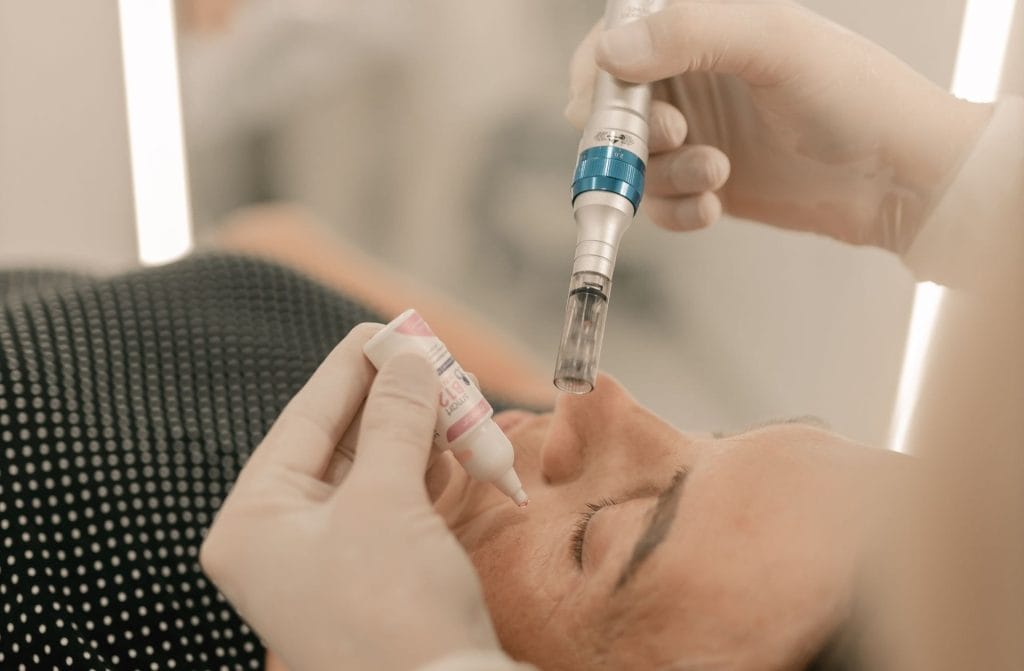
- Treatment: three sessions spaced three weeks apart, with microneedling at a depth of 1 mm after a numbing cream. Participants were followed for six weeks after the final session, 12 weeks in total.
- Measurement: two board-certified dermatologists rated standardized photos. Specialized devices measured wrinkles, elasticity, hydration and pigmentation, and skin biopsies were taken from four participants.
What the Researchers Found
Both sides of the face improved, which confirms that microneedling alone works. But the exosome side improved significantly more on every measure.[1]
| Change at week 12 | Microneedling + exosomes | Microneedling alone |
|---|---|---|
| Wrinkle depth (average roughness) | 12.4% reduction | 6.6% reduction |
| Skin elasticity | 11.3% increase | 3.3% decrease |
| Skin hydration | 6.5% increase | 4.5% increase |
| Melanin (pigmentation) | 9.9% reduction | 1.0% reduction |
Visibly Better Overall Results
Dermatologists rated overall improvement on a five-point scale. By week 12, the exosome side scored significantly higher than the control side (p = 0.005). Twice as many cases were rated “much improved” or “very much improved” on the exosome side: 8 of 28, compared with 4 of 28 on the microneedling-only side. The difference first became significant at week 6, suggesting the benefits build over time.[1]
Smoother, Firmer Skin
Wrinkle measurements improved roughly twice as much on the exosome side across all three wrinkle parameters. Elasticity told an even clearer story: it rose by more than 11% with exosomes, while the microneedling-only side showed no meaningful gain.[1]
Better Hydration and More Even Tone
Hydration kept increasing on the exosome side through week 12. Pigmentation dropped by nearly 10%, while the control side barely changed, which points to a more even complexion.[1]
Changes Confirmed Under the Microscope
Skin biopsies from the exosome side showed denser collagen and elastic fibers and more newly formed collagen than at baseline. Similar but less pronounced changes were seen on the microneedling-only side.[1]
A Well-Tolerated Treatment
No serious side effects occurred. Some participants had temporary redness, swelling or pinpoint bruising, which is typical after microneedling, and these cleared on their own within a week. No scarring or lasting skin changes were seen.[1]
Why Microneedling and Exosomes Work Well Together
The authors describe the combination as synergistic, with each part strengthening the other.[1]
- Microneedling opens the door. Tiny channels in the skin allow larger molecules such as exosomes to reach the deeper dermis.[13] The controlled micro-injuries also trigger the skin’s own healing response, stimulating collagen and elastin.[6]
- Exosomes help rebuild collagen. Adipose stem cell exosomes have been shown to reduce the enzymes that break down collagen and to support the fibroblasts that produce it.[9]
- They fight oxidative stress. These exosomes carry antioxidant enzymes and can activate the skin’s own antioxidant defenses, which may also help with UV-related pigmentation.[10–12]
- They support the skin barrier. In laboratory research, adipose stem cell exosomes boosted production of ceramides, the lipids that help skin hold moisture.[8]
At Exo Clinic Spa, we offer PRF + Dermosome™ microneedling and other exosome-enhanced regenerative therapies for skin rejuvenation, tailored to your skin type and goals.
Reading the Results With Perspective
The split-face, randomized design is a real strength, because it removes differences between people such as age, lifestyle and skin type. The authors also note that this was, to their knowledge, the first human clinical study of adipose stem cell exosomes for facial aging. Still, there are limits to keep in mind:[1]
- Small sample: 28 participants, with the size based on feasibility rather than a formal power calculation.
- One population: all participants were of the same ethnicity and had Fitzpatrick skin types III–IV, so results may differ for other skin types.
- Short follow-up: results were tracked for 12 weeks, so how long the improvements last is not yet known.
- Limited biopsies: tissue samples came from only four participants.
Larger, longer studies across diverse skin types will help confirm these findings.
Key Takeaways
- Microneedling with exosomes produced significantly better results than microneedling alone after three sessions.
- Wrinkles improved about twice as much, and elasticity increased by more than 11% on the exosome side.
- Hydration and pigmentation also improved more with exosomes, and biopsies showed more collagen and elastic fibers.
- Side effects were mild and short-lived, with no scarring.
- The study was small and short, so larger, longer trials are still needed.
This article summarizes published research for educational purposes and is not medical advice. Individual results vary.
About the Medical Reviewers
Robin Baradarian, MD, board certified physician.
Alfred Shirzadnia, DDS, graduated from NYU College of Dentistry and completed an oral and maxillofacial surgery fellowship at Wyckoff Heights Medical Center, where he also served as chief surgical resident. His work focuses on cosmetic dentistry, dental implants and full mouth rehabilitation, and he is a member of the American Academy of Cosmetic Dentistry and the American Academy of Facial Esthetics.
References
- Park GH, Kwon HH, Seok J, Yang SH, Lee J, Park BC, Shin E, Park KY. Efficacy of Combined Treatment with Human Adipose Tissue Stem Cell-Derived Exosome-Containing Solution and Microneedling for Facial Skin Aging: A 12-Week Prospective, Randomized, Split-Face Study. J Cosmet Dermatol. 2023;22:3418–3426. https://doi.org/10.1111/jocd.15872
- Chung JH, Hanft VN, Kang S. Aging and Photoaging. J Am Acad Dermatol. 2003;49:690–697.
- Zarei F, Abbaszadeh A. Application of Cell Therapy for Anti-Aging Facial Skin. Curr Stem Cell Res Ther. 2019;14:244–248.
- Wang Y, Han ZB, Song YP, Han ZC. Safety of Mesenchymal Stem Cells for Clinical Application. Stem Cells Int. 2012;2012:652034.
- Casado-Diaz A, Quesada-Gomez JM, Dorado G. Extracellular Vesicles Derived from Mesenchymal Stem Cells (MSC) in Regenerative Medicine: Applications in Skin Wound Healing. Front Bioeng Biotechnol. 2020;8:146.
- Alster TS, Graham PM. Microneedling: A Review and Practical Guide. Dermatol Surg. 2018;44:397–404.
- Shin JW, Kwon SH, Choi JY, et al. Molecular Mechanisms of Dermal Aging and Antiaging Approaches. Int J Mol Sci. 2019;20:2126.
- Shin KO, Ha DH, Kim JO, et al. Exosomes from Human Adipose Tissue-Derived Mesenchymal Stem Cells Promote Epidermal Barrier Repair by Inducing de Novo Synthesis of Ceramides in Atopic Dermatitis. Cells. 2020;9:680.
- Liang JX, Liao X, Li SH, et al. Antiaging Properties of Exosomes from Adipose-Derived Mesenchymal Stem Cells in Photoaged Rat Skin. Biomed Res Int. 2020;2020:6406395.
- Kerns ML, Miller RJ, Mazhar M, et al. Pathogenic and Therapeutic Role for NRF2 Signaling in Ultraviolet Light-Induced Skin Pigmentation. JCI Insight. 2020;5:e139342.
- Shen K, Jia Y, Wang X, et al. Exosomes from Adipose-Derived Stem Cells Alleviate the Inflammation and Oxidative Stress via Regulating Nrf2/HO-1 Axis in Macrophages. Free Radic Biol Med. 2021;165:54–66.
- Liu S, Mahairaki V, Bai H, et al. Highly Purified Human Extracellular Vesicles Produced by Stem Cells Alleviate Aging Cellular Phenotypes of Senescent Human Cells. Stem Cells. 2019;37:779–790.
- Parhi R, Supriya ND. Review of Microneedle Based Transdermal Drug Delivery Systems. Int J Pharm Sci Nanotechnol. 2019;12:4511–4523.